A bird photography program by Tim Laman · Beginner to intermediate
Trusted by 1,800+ bird photographers
Finally come home with keepers, not soft shots.
Right now your camera sits on Auto and half the morning comes home soft, blurred or one second too late. That's not a talent problem. Follow Tim's simple framework and you'll know exactly what to do when a bird appears, with his exact settings on the camera you already own.
Less than 1% refund rate14-day money-back guaranteeLifetime accessRated 5/5 by our students
Featured in
"I especially enjoyed Tim explaining his camera settings for many of his iconic shots."
SScott Rauland · verified student
Dear Friends,
You get home from a morning out, put the card in the computer, and start clicking through.
Soft. Soft again. An empty branch where the bird had been a second earlier. The one frame where something actually happened is blurred.
I know that feeling. It's not lack of talent. It's a camera that was never set up for birds.
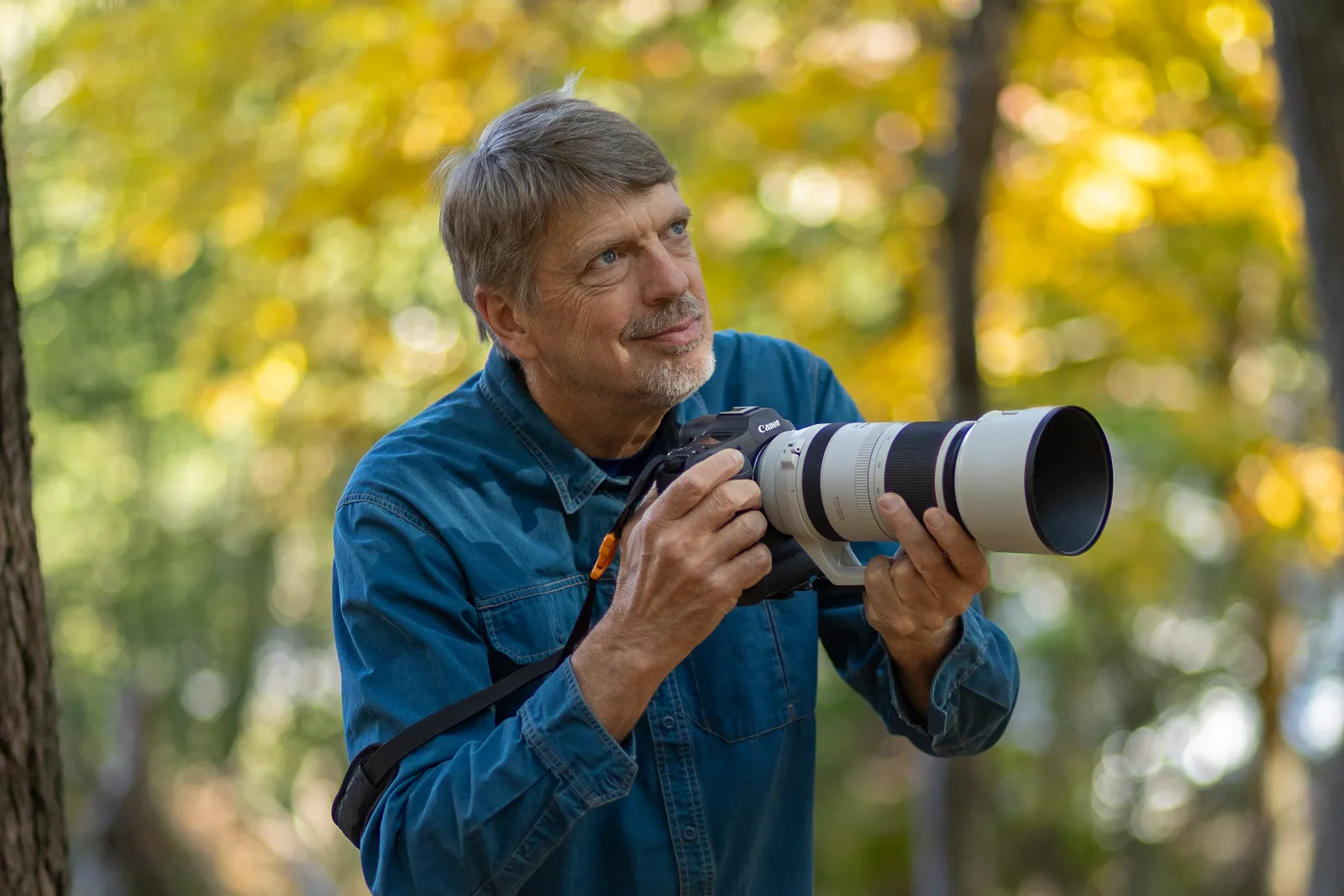
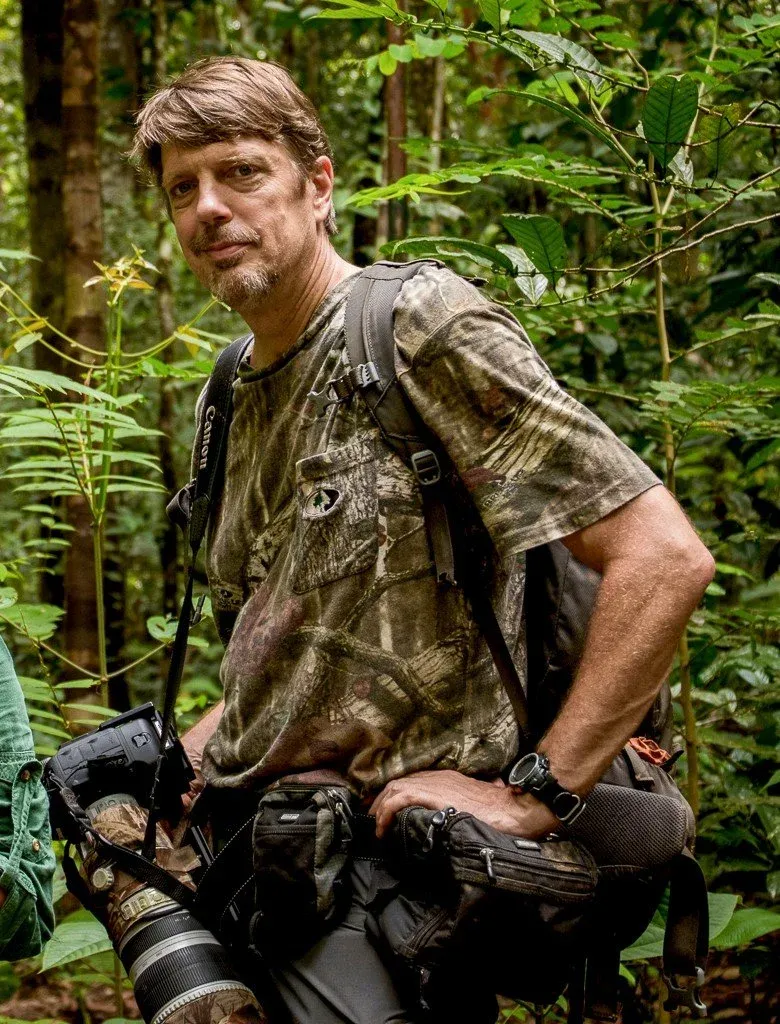
My name is Tim Laman. I photograph birds for National Geographic, where I've shot 25 feature stories, and in 2016 I was named Wildlife Photographer of the Year.
But I didn't start out anything like that. For years I came home with a whole card of soft photos, and I had no idea what I was doing wrong.
Out with the camera close to home. It took me years of soft photos to work out what was actually going wrong.
At first I thought my gear was the problem.
So I bought a new camera, but barely anything changed.
Then the problem had to be me. Maybe photography was just too hard for me.
It took me years to realize that neither of those things was true.
The real problem was that I was using the wrong technique and the wrong settings for birds. Nobody had ever given me something simple that worked every time.
In your manual, you have a lot of information. On YouTube, you can watch a lot of information. In books, you can read a lot of information.
But none of them show you how actually to use your camera in real situations with birds.
That's why I put together my complete program:
Birds, Camera,Action
In it, I've boiled down everything I've learned in nearly 30 years shooting for National Geographic, Netflix, and the BBC.
And to make it as easy as possible to follow and apply, I take you through specific bird situations and show you step by step how I set up my camera for each one.
It's like following a Google Maps route with turn-by-turn directions. You can relax, and you don't have to make the map yourself.
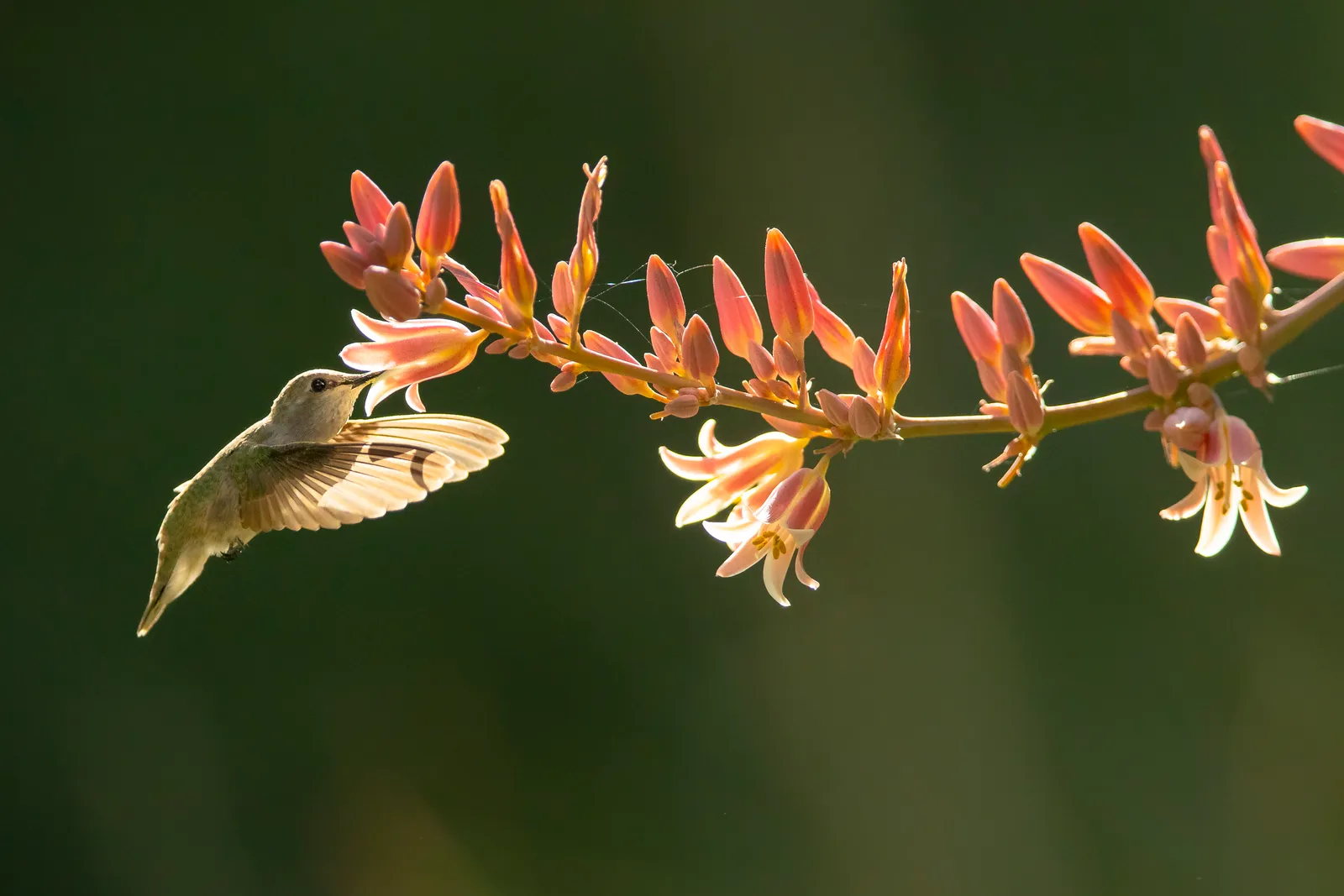
A hummingbird at a hesperaloe flower, with just enough motion left in the wings. This is the kind of shot I take apart step by step in the program, so you can go out and get one of your own.
If you still don't believe that YOU can learn to use this simple framework, let me tell you a little story.
When my son Russell was about seven, I took him out on a little photography adventure for a few days. I handed him my old Canon 20D with a 100 to 300mm kit lens. Then I set the camera up for him with five settings (you'll get the same five in the first lesson).
After that, I gave him three instructions. Get the bird in the frame. Push this button on the back with your thumb to focus. When it looks sharp, push this other one on the front.
He had no idea what a shutter speed was, or an aperture, or an ISO. He didn't need to know.
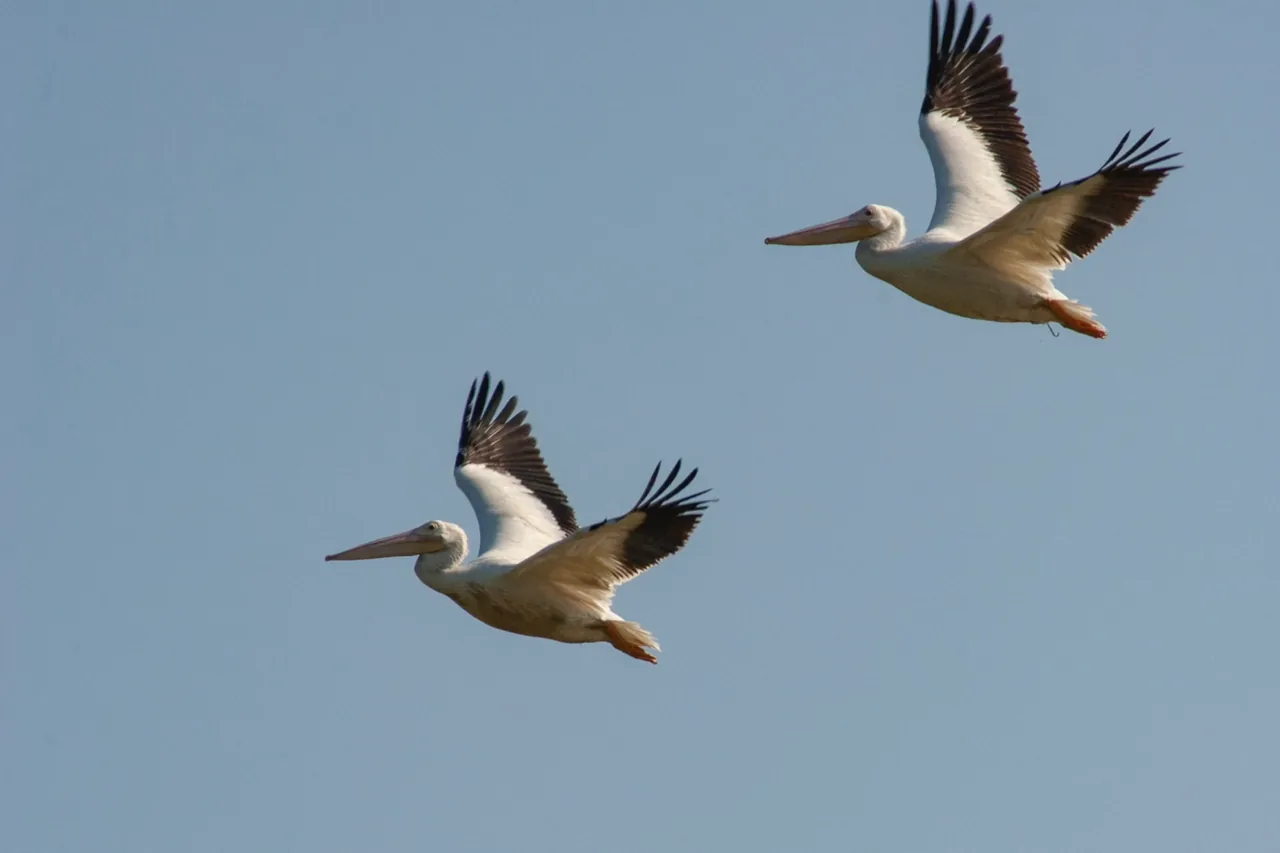
He went out and took thousands of pictures over those few days, and he had a blast. He got close enough to a black vulture that one of his frames needed no cropping at all. He even came back with a few flight shots of white pelicans.
Russell's white pelicans, taken on those few days in the Everglades. He was seven, and he had no idea what a shutter speed was.
My whole point is that you don't need to understand everything to go out and get beautiful photos of birds. Just like with my son Russell, this is exactly how we start off in Birds, Camera, Action.
From there, we build on that with specific bird situations, so you can walk into almost any scene with a bird and get the shot you had in your head.
See you inside the program,
Tim LamanPhD, Harvard University National Geographic photographer
"I was able to watch a video then take your lessons straight out into the field and notice a big difference to the quality of photos I was getting."
MMatt Nicklin · verified student
"I had been looking for a course to help me graduate from Auto to Manual and this was it."
KKathy West · verified student
The complete program
So here's what you'll learn:
1
Part 1
Ready for action
The settings I put on my own camera before I go out, so you're ready for any situation with a bird. Perfect for anyone who keeps getting soft shots, or keeps missing the moment.
2
Part 2
Handle your camera like a pro
How I hold and work the camera when there is action, plus more camera and lens settings for working with flying birds.
3
Part 3
Sharp photos every time
Back button focus, the single change that gets more birds sharp, plus the focus points I use and how I lock focus on the eye and reframe.
4
Part 4
Perfect focus in flight
How I hold focus on a bird that is already in the air, and the settings and techniques behind it.
5
Part 5
Mastering the exposure
The auto-exposure modes, what each one actually does, and which one I switch to in which situation out in the field.
6
Part 6
Perfect exposure in any light
Exposure compensation and manual mode, for the times when the light fools your camera into getting it wrong.
7
Part 7
Birds in flight
My tips for the flight situations you actually run into, from takeoffs and landings to birds on the wing.
8
Part 8 · Bonus
The art of motion
A bonus lesson on shutter speed. Once you start slowing it down on purpose, a lot of creative room opens up.
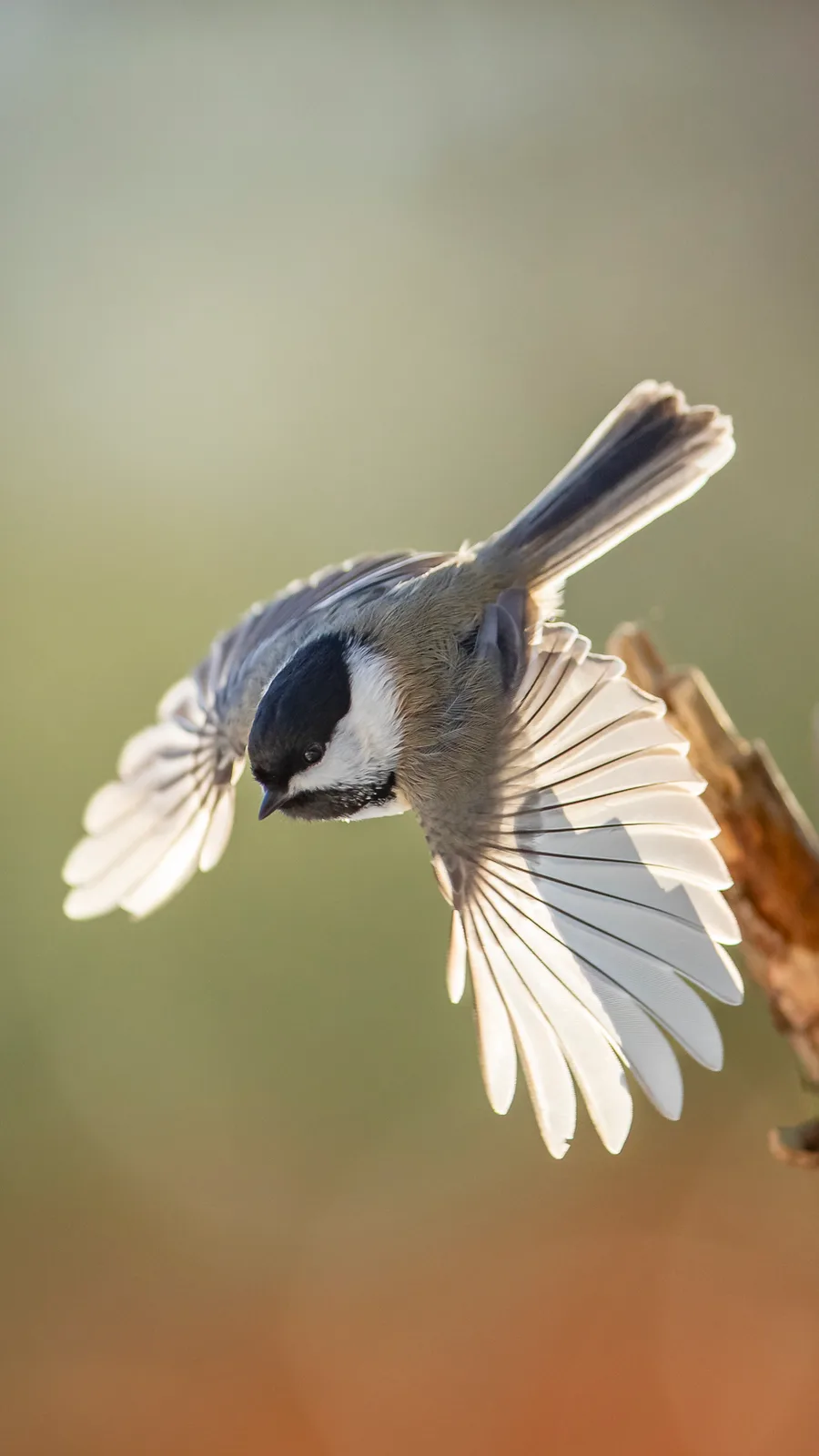
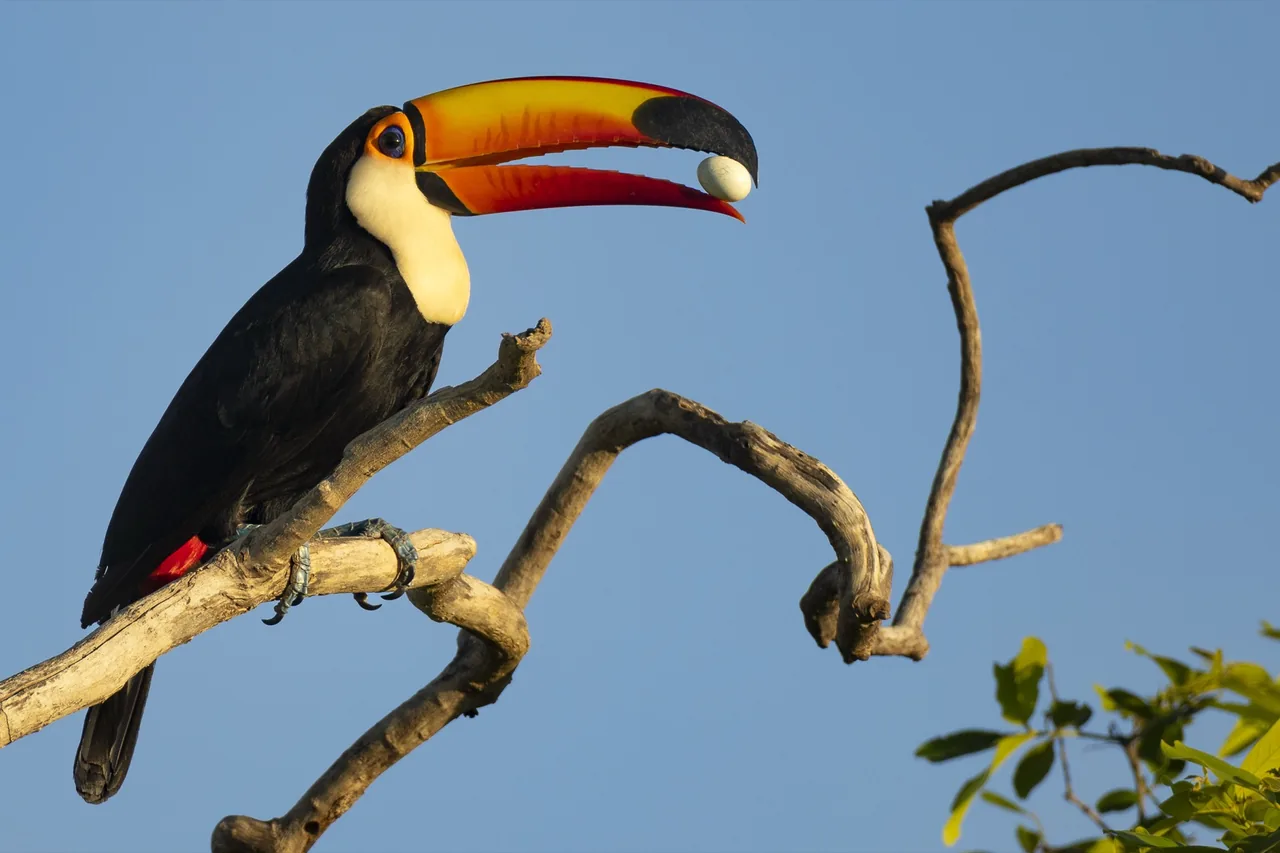
Nothing exotic about the technique. The same framework works on a toucan and on the chickadee at your feeder.
More than 1,800 photographers have taken the program. Here is a selection of their reviews.
K
Kathy WestReview on Thinkific · October 1, 2025
Course helped immensely
I had been looking for a course to help me graduate from Auto to Manual and this was it.
Tim did a great job explaining why he chose the settings he did for the photos he showed in the video and also talked about other settings, like Back Button Focus, which I now use and love it!
Thanks Tim!
Verified student
P
Peter ColmanReview on Thinkific · May 7, 2026
An amazing introduction to bird photography from a great expert
I am a beginning photographer who has worked hard to get familiar with a new mirror less camera. I had made a few attempts at bird photography with a newly purchased telephoto lens but been a bit disappointed with the results. This course has taught me numerous tricks to take to the field. It is magnificently presented by Tim who speaks directly to you sharing his vast experience with great examples. Thanks so much!
Verified student
L
Lisa von BielaReview on Thinkific · October 6, 2025
Outstanding!
Tim does a great job explaining concepts and techniques, and I especially appreciate how he uses examples to really make the material come alive in a tangible way.
I'd heard of back-button focusing, but never really understood it or what it could do for me, and now I'm excited to try it!
There were a number of "big revelation" moments for me, and I'm anxious to put these things into my bird photography practice and get to that "next level."
Verified student
M
Matt NicklinReview on Thinkific · July 29, 2024
I learnt so much!!
Thanks Tim, you have helped me get better at bird photography and photography in general. I was able to watch a video then take your lessons straight out into the field and notice a big difference to the quality of photos I was getting. Keep up the good work!! Matt
Verified student
S
Scott RaulandReview on Thinkific · November 24, 2024
Excellent overview of the basics
What a wonderful experience to learn and/or review the fundamentals of wildlife photography with one of the masters of the craft! I especially enjoyed Tim explaining his camera settings for many of his iconic shots.
Verified student
L
Luis CarrascoReview on Thinkific · December 14, 2025
Truly enjoyable class for all levels of photography
Tim Laman does a great job in simplifying the leaning experience of bird photography (a touch subject even for pros!) giving you tips so you can start shooting and learning from lesson 1. I already started seeing improvements in my photography by adjusting to the lessons and I'm very excited to keep learning and enjoying the process with the current gear I have.
Verified student
R
Raffaella ChersoniReview on Thinkific · April 30, 2024
Best course ever on bird photography
By far it is the best bird photography course I have ever seen with a lot of tips on different types of situations with different birds.
Also, thanks Tim for the great work you have done in this course explaining in a very simple way some concepts that are not easy to explain in photography. I would definitely recomment this course to anyone interested in wildlife and in particular in bird photography.
Verified student
M
Mark HeilmanReview on Thinkific · May 7, 2024
Clear, concise, and inspirational
This course exceeded expectations. There is an abundance of practical information presented in a very clear, concise manner with ample examples.
At this point I am not sure if I am more enamored with Tim the photographer or Tim the presenter. It takes real talent to be able to distill this much information into such an exceptional presentation.
Verified student
D
Daniel HamelReview on Thinkific · March 19, 2026
Fantastic!
This is definitely the best "crash course" I've taken on the topic, and really helped me figure out how to get my camera set up properly for bird photography.
Verified student
W
William SouthgateReview on Thinkific · April 23, 2026
A great update!
Although I have been shooting for the last 5 years, this course both solidified my foundation and advanced my understanding of bird photography in a meaningful, efficient manner. It also inspired me to push beyond my current internal limitations of what makes a "great" image.
Verified student
The offer
Birds, Camera,Action
Our complete program: eight step-by-step parts with National Geographic photographer Tim Laman. Here's what you get when you sign up today.
Eight step-by-step video lessons
The ready-for-action settings, so you can shoot birds properly the same day you start
Two full lessons on focus, including back button focus and which focus area to use when
Two full lessons on exposure, including what to do when the light fools your camera
A flight lesson and a bonus lesson on deliberate motion blur
My own settings, behind my own pictures
I walk you through my own photographs and the exact settings behind each one
Everyday birds as well as famous ones, so the lessons work at your own feeder
Key takeaways at the end of each lesson, so you can find a setting again later
Watch it anywhere, and keep it
Instant access on your computer, tablet or phone, wherever you are
Yours to keep for good, so you can come back to a lesson before a trip
Start tonight and go at your own pace, nothing expires
You don't have to say yes today. You only have to say maybe.
Go through the whole course first. If it's not for you, email us and get your money back
Everything in this course comes from work I'm still doing. Here's some of it.
25 feature stories for National Geographic, with a strong emphasis on birds.
Wildlife Photographer of the Year 2016, the overall title, for a picture of an orangutan climbing a fig tree in Borneo. The idea for that photograph took me more than twenty years to get right.
All 39 species of birds-of-paradise, photographed in the wild. Eight years, 18 expeditions and 2,006 hours sitting in blinds. I'm the first person to do it.
Camera work for Planet Earth II and Our Planet, plus other films for the BBC, Netflix and National Geographic.
And when I'm home in Massachusetts I photograph chickadees, blue jays and woodpeckers in my own backyard. Those pictures sit in my book Bird Planet next to the birds-of-paradise.
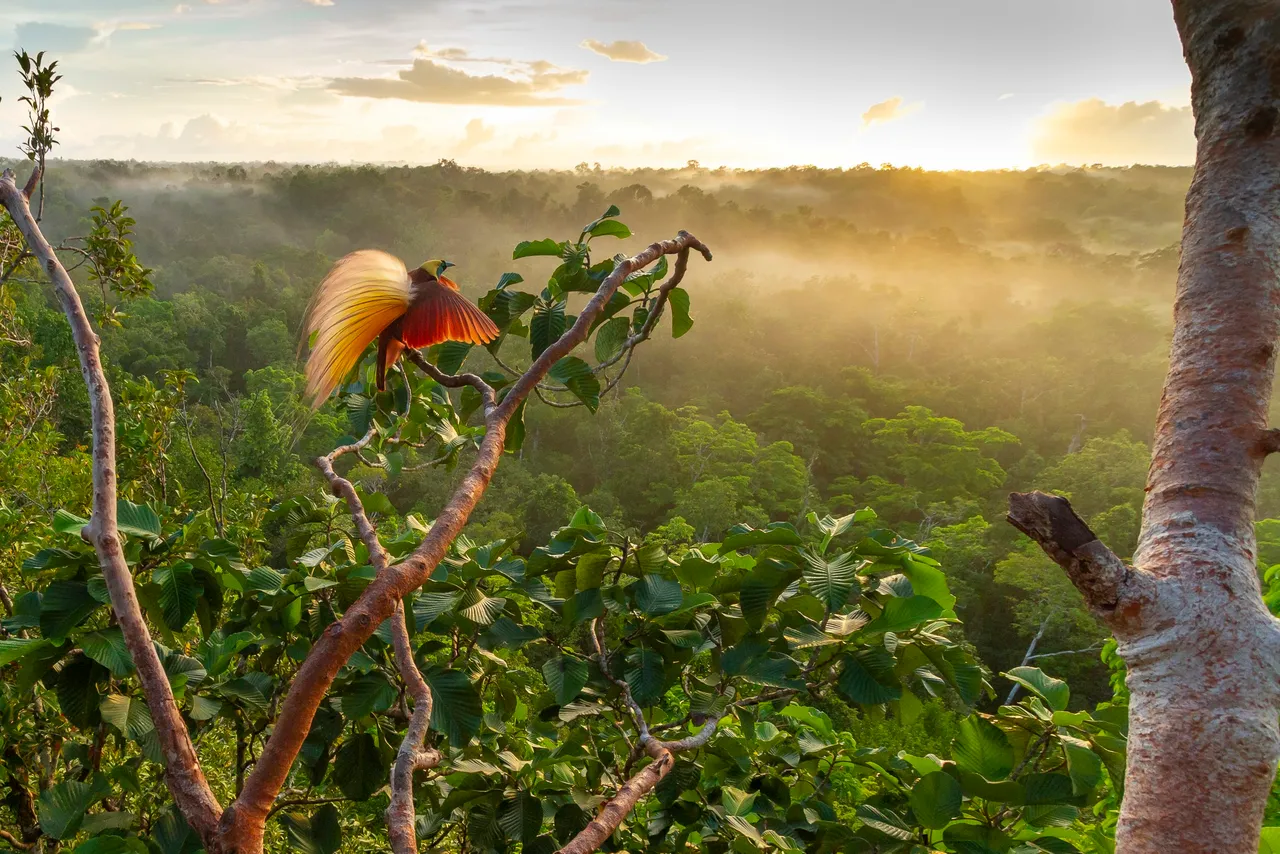
A bird-of-paradise at dawn in the Aru Islands. Getting this one meant rigging ropes, climbing the tree in the dark every morning for a week, and waiting in a blind built out of poles and palm leaves.
$64.35 instead of $99 · 14-day money-back guarantee
Questions
What people ask before they enroll
No. Russell shot those pelicans on a camera I had already retired, with a kit lens. Cameras that are 10 or 15 years old still take excellent bird photos, and you really don't need a huge expensive lens to start. The course is about getting more out of the camera you already have, and one student put it better than I can: "no need to go and purchase additional items like in other courses."
Birds, Camera, Action is a beginner to intermediate course, and it starts from the settings up. If you've been shooting for years, most of the value is in seeing how I actually work in the field and which settings sit behind specific photographs. William Southgate had been shooting for five years when he took it and wrote that it "solidified my foundation and advanced my understanding."
Neither do I, most of the year. I live in Massachusetts and photograph chickadees, blue jays and woodpeckers in my own backyard, and some of those pictures ended up in my book. If you can't find uncommon birds, take uncommon photos of common birds. A chickadee at your feeder is enough to practice everything in this course.
Some of it, yes, and there's good material out there. The trouble is that most of it explains what a setting is rather than when to use it, and the videos come in a random order, so nothing sticks. This is one photographer's whole method in one place, in the order you need it, from the first setting to birds in flight.
About two hours in total, in eight separate lessons, so you can watch one in an evening. You can also do what Matt Nicklin did and watch one lesson, go straight out with the camera, and come back for the next one. The course is yours to keep, so there's no rush and nothing expires.
No. Birds, Camera, Action is about getting the shot right in the camera, out in the field. What you do with the file afterwards in Lightroom is a separate skill, and these eight lessons don't cover it.
Email us within 14 days of buying and we refund you in full. It happens rarely. Of the first 2,237 orders, 18 asked for their money back, which is under 1 percent, but the guarantee is there so the decision is easy either way.
Ready when you are
Your next morning out could go rather differently.
Start with lesson one tonight. It's about fifteen minutes, and it ends with a set of settings you can use at the feeder tomorrow.